


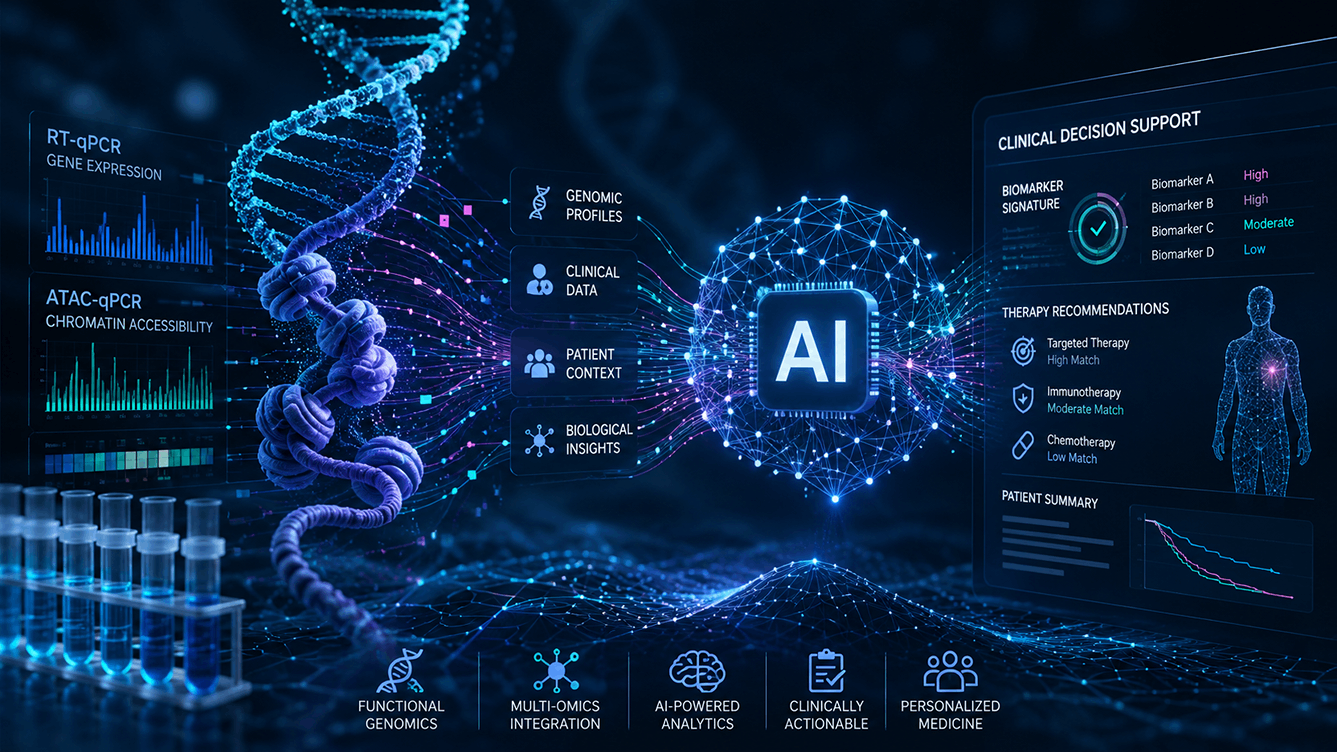
The early detection of cancerous diseases and the selection of personalised treatments is still hindered today by the fact that a significant part of the available genetic, imaging and clinical information is processed in isolation. As a result of a 2-year research and development collaboration carried out with the support of the National Research, Development and Innovation Office (NKFIH), new artificial intelligence (AI) based IT solutions have been created, such as the analysis of oncological, functional genomic markers, automatic tumour detection in diagnostic imaging and the processing of clinical patient data, which are brought together by an integrated decision-support platform. The framework created under the leadership of InnovITech, with the participation of GE HealthCare and Széchenyi István University, may contribute to a deeper understanding of the biological background of cancerous diseases, as well as to a more accurate foundation for diagnostic and therapeutic decisions.
Oncological diseases are extremely complex conditions, often underpinned by genetic and epigenetic alterations that are difficult to detect. The biomarker tests most commonly used today to examine the molecular background of cancerous diseases primarily analyse the protein-coding gene regions. However, this covers only a few, 2-3 percent, of the entire genetic material, so many regulatory genomic mechanisms that may play a role in the development and progression of tumours can remain hidden. The most complete possible exploration of these relationships may contribute to the earlier detection of diseases, the selection of more accurate personalised therapies, as well as the shortening of the time between diagnosis and the start of treatment.
The research focused on the examination of diffuse large B-cell lymphoma (DLBCL), a haematological cancerous disease, while an important consideration during the developments was the creation of a flexible methodological and data-analysis framework that, in the future, also provides the opportunity to identify new biomarkers aiding diagnosis and therapy selection in the case of other tumour types.
“We consider it a key result that, during the project, the researchers and software development engineers of InnovITech Kft. created an AI-supported bioinformatics data-processing and analysis environment that enables the integrated examination of genomic, epigenetic and clinical data. It is important to highlight that we succeeded in identifying functional genomic patterns that may be relevant in relation to DLBCL disease status and therapy selection, which encourages the project participants towards clinical validation as soon as possible.” – shared in connection with the research Dr. Márien Szabolcs, Managing Director of the project-leading InnovITech Kft.. “One special element of the development is the innovative 3D visualisation modelling of the spatial structure of genomes, which helps to reveal the differences between the spatial structural profiles of genomes obtained from various cell states, and a better understanding of the molecular background of cancerous diseases.
Within the framework of the project, alongside the genomic and bioinformatics developments, AI-based solutions supporting imaging diagnostics also played a prominent role.
“For an increasingly accurate understanding of cancerous diseases, relying on a single data source is no longer sufficient. One of the most important results of the project is that it demonstrated: the coordinated analysis of imaging, genomic and clinical data can open up new opportunities in the biological understanding of tumours. During the project, GE HealthCare researchers developed and validated AI-based imaging solutions that automatically identify and delineate cancerous lesions on PET/CT scans, as well as support the extraction and analysis of imaging biomarkers. The next step of precision oncology is the multimodal integration of imaging, genomic and clinical data, which enables the creation of a more comprehensive tumour profile, supporting diagnosis, prognosis and therapeutic decision-making.” – added Ferenczi Lehel, Data and Analytics Director of GE HealthCare.
The structured processing of health data from different sources and ensuring its usability for research purposes were also indispensable to the success of the initiative.“During the project, Széchenyi István University took on a decisive role in the development of digital solutions supporting the integration of clinical and research data.” – highlighted Prof. Dr. Horváth Zoltán, Head of the Defence and Space Industry Technology Innovation Research Centre of Széchenyi István University. “The main result of our research is the creation of software that can run in the cloud (e.g. AWS ECS) or on high-performance supercomputing infrastructure (HPC), such as Komondor, which, with the help of a self-hosted language model, extracts structured therapeutic data from Hungarian free-text hospital records and laboratory results. We tested the solution on the outpatient records of more than 26,000 DLBCL and control patients, where we identified around 50 parameters with high accuracy and multiply validated results. Our close collaboration with the Petz Aladár University Teaching Hospital enabled us to develop and validate our research building on the textual, imaging and genomic data of DLBCL patients.”
The results of the project, carried out in a consortium, clearly show that the future of oncological research is built on the collaboration of various disciplines. The linking of genomic research, AI, imaging procedures and health data analysis enables the development of new tools that, in the longer term, may support more precise and personalised patient care.
Project identifier: 2023-1.1.1-PIACI_FÓKUSZ-2024-00027; Grant amount: HUF 791,377,269